Langer Universal Curette
December 10, 2025
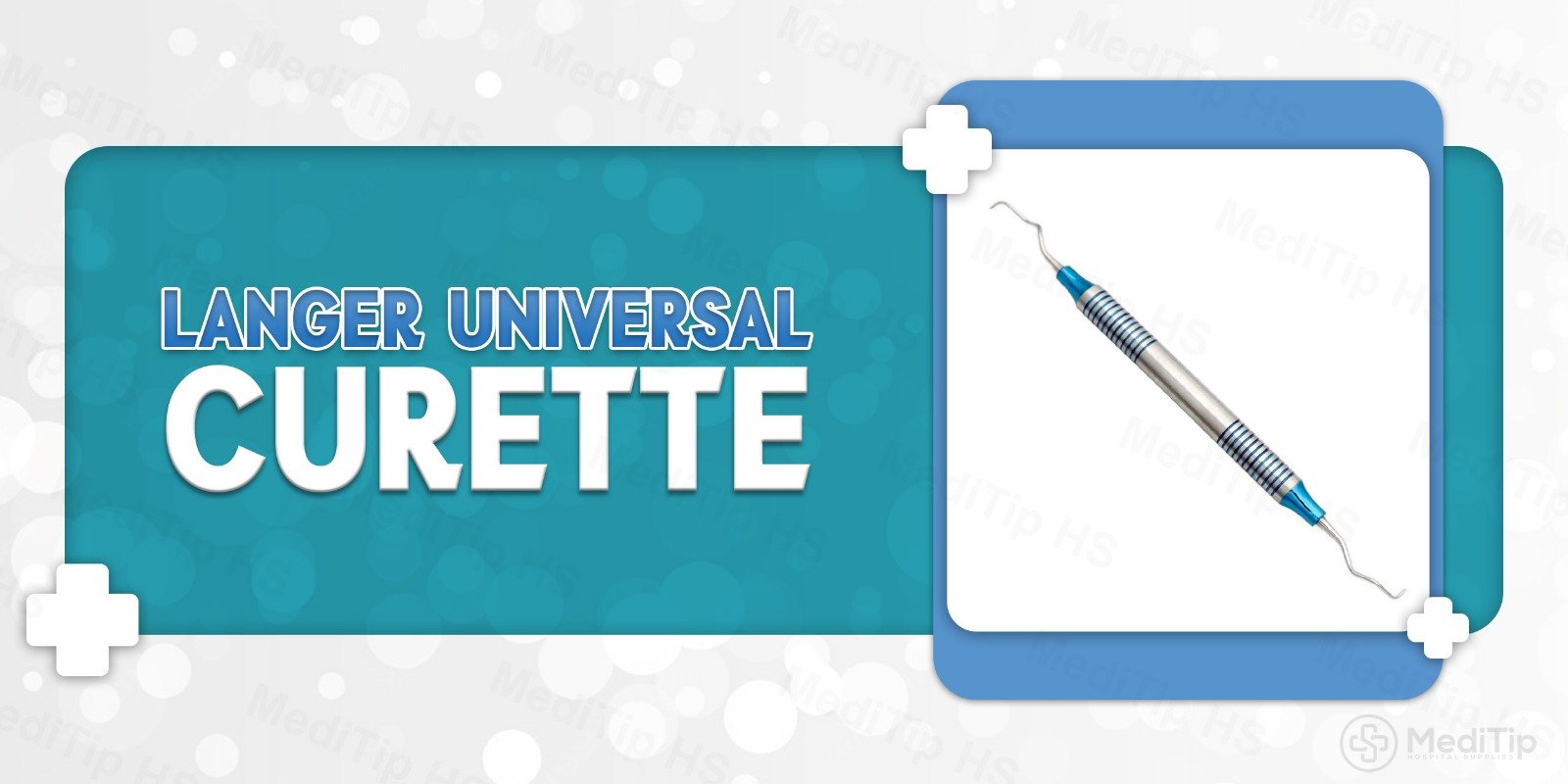
The Langer Universal Curette stands as one of the most intelligently engineered hand instruments in periodontal therapy. Designed by Dr. Burton Langer, a pioneer in periodontology, it fuses the precision of Gracey area-specific curettes with the versatility of universal curettes into a single, highly efficient tool. This hybrid design delivers Gracey-level shank angulation with two cutting edges, offering the adaptability of a Columbia or Barnhart while retaining anatomical precision. It is an essential instrument in both periodontal and hygiene practice.
This guide covers design, function, technique, ergonomics, maintenance, and clinical advantages, everything needed for confident, effective use.
1. Introduction
The evolution of periodontal instruments has been driven by two core needs: efficiency and adaptability. Clinicians often switch between Gracey (area-specific) and universal curettes during debridement, a time-consuming process. Dr. Langer’s innovation eliminates this inefficiency. By blending Gracey shank angulation with a universal blade, the Langer curette enables:
· Fewer instrument changes
· Superior access to complex root anatomy
· Preserved tactile feedback
It embodies modern instrumentation: faster, safer, and more ergonomic procedures.
2. Instrument Design and Construction
The Langer curettes’ success lies in its thoughtful, ergonomic design. Every feature enhances performance and accessibility.
Key Structural Features
· Two parallel cutting edges per working end → true universal functionality
· Rounded toe and back → prevents tissue trauma during subgingival work
· Semicircular cross-section → smooth, safe adaptation beneath the gingiva
· Blade face at 90° to terminal shank
· Gracey-style shank angulation → optimized for specific quadrants
· Balanced handle alignment → improves tactile sensitivity and comfort
The result? A universal curette that performs like a Gracey, ideal for complex root surfaces without constant instrument switching.
3. How the langers Differs From Others Curettes
The explorer is a simple yet highly engineered instrument that balances tactile sensitivity, durability, and maneuverability.
Components
Handle
- Cylindrical or hexagonal in shape for ergonomic grip.
- Made predominantly from stainless steel, titanium, or lightweight alloys.
- May include a knurled surface for easier control.
- Balanced for precise fingertip handling.
Shank
- The slender segment between the handle and the working end.
- Designed to provide flexibility and vibration transmission.
- May be straight, curved, or angled to allow access to specific tooth surfaces.
Working End (Tip)
- Extremely fine, sharp point for detecting minute irregularities.
- Angled or curved to reach occlusal, interproximal, and subgingival areas.
- Hardened and polished for smooth gliding and longevity.
The design of the explorer is such that every movement transmits the tactile information directly to the operator's hand for highly accurate detection.
4. Types of Dental Explorers (Sondes)
Dental explorers come in a variety of patterns for specific diagnostic purposes. Some are single-ended, while others are double-ended, with two tips in different designs for versatility.
Common Types
Type:
- Straight Explorer
- Curved/Hooked No. 23
- Explorer No. 17
- Explorer 11/12
- Pigtail Explorer
- Cowhorn Explorer
Key Features
- Simple, straight shank with pointed tip
- Shepherd’s Hook, curved hook-like tip
- Sharp, right-angled tip
- Double-ended, mirror-image tips
- Spiral-shaped tip
- Twin curved tips like horns
Primary Use
- Occlusion pits and fissures
- Caries detection, restoration margins
- Interproximal areas, gingival margins
- Subgingival calculus, root smoothness
- Interproximal calculus, restoration finish
- Deep interproximal spaces
Each variation amplifies the possibility of visibility, reach, and tactile detection in specific areas of the mouth.
5. Materials Used
Good quality explorers are made from materials that are durable, corrosion-resistant, and provide tactile sensitivity.
Common Materials
- Stainless Steel (AISI 420 or 440 Series): Standard for dental instruments. Provides corrosion resistance and strength.
- Tungsten Carbide-Tipped Explorers: Offer superior hardness and edge retention. Suitable for long-term professional use.
- Titanium: Lightweight and hypoallergenic. Ideal for dentists who prefer reduced hand fatigue.
- Plastic (for Disposable Explorers): Single-use, economical, and perfect for sterile environments.
Precision grinding and polishing ensure a smooth surface with consistent tactile transmission, improving performance in clinical procedures.
6. Function and Working Principle
In essence, the explorer (sonde) works by transmitting tactile feedback to the operator's fingers: as the tip glides across tooth surfaces, it catches or resists when encountering softened enamel, irregularities, or calculus deposits.
Key Functional Principles
- Tactile Sensitivity: The fine, flexible tip vibrates subtly when passing over irregular surfaces, allowing the dentist to “feel” differences.
- Flexibility: The thin shank allows minute vibrations to travel up the handle without distortion.
- Precision Point: Sharpness of the tip improves the detection of microscopic defects in tooth surfaces or restoration edges.
This tactile mechanism provides instant diagnostic information to the dentist that cannot be fully reproduced by either visual or radiographic examination alone.
7. Clinical Applications
This is one of the most commonly used instruments in both diagnostic and operative dentistry due to the versatility it offers.
Primary Uses
Restoration Assessment
- Checks for gaps, overhangs, or fractures in fillings, crowns, and bridges.
- Confirms the extent of carious lesions during cavity preparation.
Caries Detection
- Identifies soft, sticky, or rough areas indicating enamel or dentin decay.
- Ensures smooth finishing of restorative margins.
Calculus Detection
- Detects subgingival and supragingival calculus deposits.
- Helps in determining the need for scaling and root planing.
Tooth Surface Evaluation
- Detects microcracks, enamel defects, and irregularities.
Endodontic Use
- Locates canal orifices during root canal treatment.
Periodontal Use
- Used in combination with probes to examine sulcus depth and root smoothness.
Due to this precision, the explorer is an indispensable device in routine examinations, restorative treatments, and periodontal maintenance
8. Ergonomics and Handling
Proper ergonomics in handling the explorer reduces operator fatigue and enhances tactile accuracy.
Ergonomic Features
- Knurled Handle Surface: Prevents slippage during procedures.
- Balanced Weight: Reduces muscle strain during long use.
- Optimal Length: Ensures visibility and reach without obstruction.
- Double-ended design: Provides immediate access to different tip shapes.
Dentists use a modified pen grasp to have maximum control that allows delicate movement and superior tactile perception.
9. Maintenance and Sterilization
Proper maintenance assures not only consistent performance but also avoids cross-contamination.
Cleaning and Care
- Rinse immediately after use to prevent drying of debris.
- Use enzymatic detergents before autoclaving.
- Avoid using abrasive cleaning tools that can dull the tip.
Sterilization
- Autoclave at 134°C for 3–5 minutes.
- Store in dry, sterilized pouches or trays.
- Check tips regularly for blunting or corrosion.
Dull explorers compromise diagnostic accuracy; thus, regular inspection and timely replacement are very important.
10. Sonde (or Explorer) Advantages
The enduring importance of the dental explorer is due to an unequaled combination of simplicity, precision, and sensory feedback.
Key Benefits
- Provides instant tactile detection of surface irregularities.
- Effectively accesses hidden or interproximal areas.
- Lightweight and ergonomic design ensures comfort.
- Improves diagnostic accuracy.
- Reusable and easy to sterilize.
- Available in several designs for different applications.
It offers efficiency in real-time detection, thus giving an accurate diagnosis before radiographic confirmation can be made.
11. Limitations and Precautions
While invaluable, explorers must be used judiciously to avoid iatrogenic damage.
Precautions
- Avoid using excessive force to prevent enamel microfracture.
- Stroke gently and exploratorily rather than forcibly probing.
- Avoid deep insertions into carious lesions to prevent contamination or irritation of the pulp.
- Correlate the tactile findings with the visual and radiographic evidence.
The balanced and careful use guarantees diagnostic precision without compromising tooth integrity
12. Modern Innovations
Today's dental instrument manufacturers are continually improving explorers to meet contemporary clinical requirements.
Recent Developments
- Color-Coded Handles: Easy identification during multi-instrument procedures.
- Silicone-Grip Handles: Improved comfort and reduced fatigue.
- Laser-textured tips for improved tactile transmission.
- Disposable Explorers are ideal for high-sterility environments.
- Ultrafine Micro-Tips: Improved detection of early-stage caries.
Some of the advanced explorers are incorporated into electronic caries detection systems, which merge the traditional tactile methods with digital analysis for hybrid diagnostic performance.
13. Quality and Manufacturing Standards
High-quality explorers-sondes are manufactured in accordance with international medical standards to ensure precision, safety, and durability.
Key Standards
- Manufactured under ISO 13485 certification.
- Made from surgical-grade stainless steel: AISI 420/440.
- Tested for tip sharpness, flexibility, and corrosion resistance
- Subjected to autoclave cycle validation for reusability.
Renowned manufacturing hubs like Tuttlingen in Germany and Sialkot in Pakistan are known globally for producing premium explorers that meet the highest professional demands
14. Explorer in Modern Dentistry (Sonde)
There is no replacement for the explorer even in this digital era. Intraoral cameras and laser scanners provide either visual or radiographic data and cannot reproduce tactile sensation — the dentist’s most trusted sense in diagnosis. It is used by dentists for screening, confirmation of visual findings, and for final checks during restorative work. The explorer bridges the gap between a visual inspection and clinical judgment, providing an instant, tangible connection between observation and action.
Conclusion
The explorer, or sonde, is one of dentistry's most enduring and vital tools — simple in appearance, but profound in importance. From the detection of early caries to the perfection of restorative work, it remains the cornerstone of clinical diagnosis.The fine balance of tactile sensitivity with ergonomic design and durability assures that it will remain the dentist’s most trusted diagnostic companion. Despite advances in technology, no instrument has replaced the explorer’s ability to feel what the eye cannot see. It remains a symbol of precision, sensitivity, and human skill in modern dentistry — a timeless tool in the pursuit of oral health and excellence